
Call for Free Consultation:
Free Consultation: (212) 425-0700
Call For Free Consultation: (212) 425-0700
Call for Free Consultation:
Free Consultation: (212) 425-0700
Call For Free Consultation: (212) 425-0700
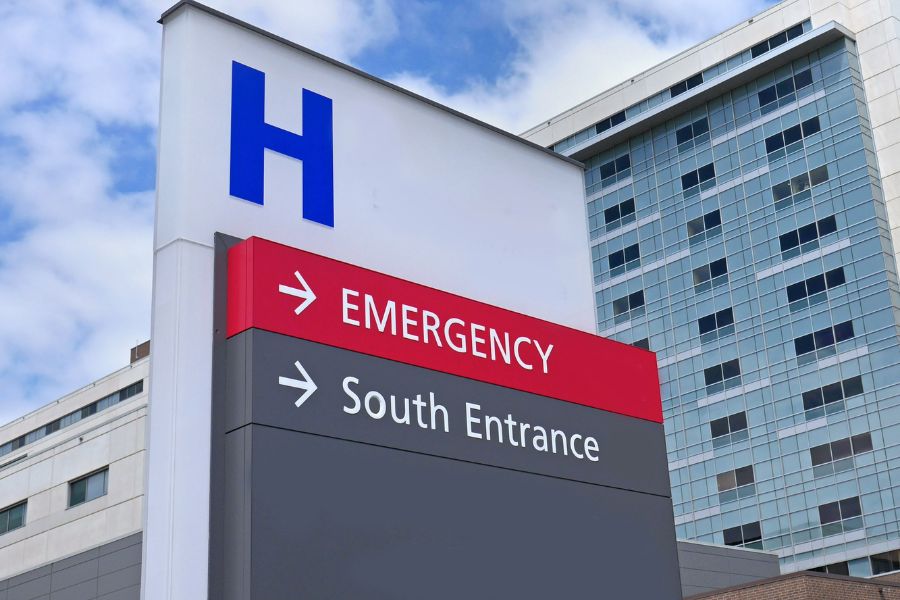
Yes. You can sue a hospital for negligence in New York when its staff, its systems, or its policies fall below accepted medical standards and cause injury. A hospital is generally responsible for the mistakes of its nurses, residents, and employed physicians. Strict deadlines apply, and claims against public hospitals like Bellevue start with a 90-day notice of claim.
Kelner & Kelner represents patients and families in New York City who were harmed by hospital care. That includes emergency room errors in the Bronx, surgical injuries in Manhattan, and birth injuries in Brooklyn and Queens. The firm takes on cases with catastrophic injuries and complex medical records, and builds every file from intake forward as if a jury will hear it. This post explains when New York law holds a hospital responsible, how these claims work, and what deadlines apply. For a broader overview, see our NYC medical malpractice lawyers page.
You focus on healing. We’ll handle the rest. Call now. Don't pay a penny unless we win your case. Contact Kelner and Kelner today at (212) 425-0700 or through our website.
You can sue a New York hospital when four things are true. The hospital or its staff owed you a duty of care. The care fell below accepted medical practice. That departure caused your injury. And the injury led to real losses. A bad outcome alone is not enough. The claim depends on proof that the care itself was substandard.
Medical malpractice is the legal term for treatment that departs from the standard of care, meaning what a reasonably careful provider would have done in the same situation. In a hospital, that standard applies to everyone who touches a patient's care: emergency physicians, nurses, residents, pharmacists, radiology technicians, and the hospital itself.
A hospital can be liable in two ways. It can be held responsible for the negligence of its employees under a rule called vicarious liability. It can also be directly negligent for its own failures. Those include unsafe staffing, broken protocols, poor supervision of residents, or granting privileges to a doctor it should have screened out. Under New York Public Health Law § 2805-k, hospitals must check a physician's credentials and history before granting privileges. A hospital that skips that review can face a claim of its own.
A New York hospital is generally responsible for the negligence of its employees, including nurses, residents, and staff physicians. Private attending physicians who are not hospital employees are usually responsible for their own care. An important exception covers patients who come through the emergency room and are treated by doctors the hospital assigned.
Many doctors who treat patients at NYC hospitals are not hospital employees. They may belong to independent practice groups that hold admitting privileges at NewYork-Presbyterian, Mount Sinai, NYU Langone, Maimonides, or Lenox Hill. When a patient chose a private doctor who then treated them at the hospital, the claim against that doctor is usually separate from any claim against the hospital.
The picture changes when the patient did not choose the doctor. Under New York law, a hospital can be held responsible for a physician it supplied to a patient. A patient who walks into an emergency department and is seen by whoever is on duty reasonably believes that doctor works for the hospital. Courts can treat that physician as the hospital's agent. Hospitals are also responsible for how they supervise residents and fellows in teaching hospitals, where much of the hands-on care comes from physicians still in training.
Sorting out who employed whom often requires reviewing staffing records, privileging files, and billing records early in the case. Many hospital cases name the hospital, one or more physicians, and their practice groups as defendants.
The most common hospital negligence claims in New York involve missed or delayed diagnoses, medication errors, and surgical mistakes. Others involve birth injuries, failures to monitor a patient, hospital-acquired infections, patient falls, pressure ulcers, and discharging a patient too early. The common thread is a preventable error that a careful hospital would have caught or avoided.
Under CPLR § 214-a, you generally have two years and six months to sue a private New York hospital for medical malpractice. The clock runs from the error or from the end of continuous treatment for the same condition. Public hospitals run by NYC Health + Hospitals have far shorter deadlines, starting with a 90-day notice of claim.
Several rules can change the timeline for a claim against a private hospital:
Our blog on how long you have to file a medical malpractice lawsuit walks through these deadlines in more detail.
Yes. Claims against NYC Health + Hospitals facilities, including Bellevue, Elmhurst, Kings County, Jacobi, Lincoln, and Harlem Hospital, follow much stricter rules. A notice of claim must generally be served within 90 days. The lawsuit must generally be filed within one year and 90 days. Missing either deadline can end the claim.
NYC Health + Hospitals is a public benefit corporation. Claims against it are governed by Unconsolidated Laws § 7401(2) and General Municipal Law §§ 50-e and 50-i. A notice of claim is the formal notice you serve on a public entity before you can sue it. It describes when, where, and how the injury happened. After it is served, the hospital system can demand a 50-h hearing, an examination under oath where the patient answers questions about the claim before any lawsuit is filed. A court can sometimes allow a late notice of claim, but that request must be made within the one year and 90 days and is never guaranteed.
Federal facilities have their own rules entirely. Claims involving the VA NY Harbor Healthcare System in Manhattan and Brooklyn, or the James J. Peters VA Medical Center in the Bronx, fall under the Federal Tort Claims Act. That law requires an administrative claim, usually on Standard Form 95, within two years (28 U.S.C. § 2401(b)). Some community health centers are also treated as federal employers for malpractice purposes, which shifts those claims into federal court in the Southern or Eastern District of New York. Identifying who actually operates a facility is one of the first steps in any hospital claim.
To win a hospital negligence case in New York, you need to prove what the standard of care required and how the hospital fell short. You also need to prove that the departure caused your injury. In practice, that proof comes from a physician who reviews the records and explains the error. New York also requires a certificate of merit when the lawsuit is filed.
Under CPLR § 3012-a, the attorney filing a medical malpractice complaint must certify that they consulted a licensed physician. The certificate states that there is a reasonable basis for the case. After the hospital answers, the plaintiff must also file a notice of medical malpractice action under CPLR § 3406(a). Medical malpractice cases in New York State Supreme Court then move through court-supervised conferences meant to keep them on schedule.
Some claims focus on what the patient was told rather than the treatment itself. Under Public Health Law § 2805-d, a hospital or provider can be liable for lack of informed consent. That applies when a patient was not told the reasonably foreseeable risks and alternatives, and a reasonable person who had been told would have refused the procedure.
Medical malpractice is not part of the 2026 auto tort reform. Fault in hospital cases is still divided under New York's pure comparative fault rule in CPLR § 1411.
New York Public Health Law § 18 gives patients the right to their own hospital records. The New York State Department of Health says hospitals must allow patients to inspect records within 10 business days of a written request. Copy fees are capped at 75 cents per page. Requesting the complete chart early is one of the most important steps.
A complete hospital record in a negligence case usually includes far more than the discharge summary:
Some hospital documents are off-limits. Under Education Law § 6527 and Public Health Law § 2805-m, many internal quality assurance and peer review materials are protected from disclosure. That often includes incident reports. The case usually has to be proven from the chart, the monitoring data, and testimony, which is why preserving the full electronic record matters.
A patient harmed by hospital negligence in New York can seek past and future medical expenses and past and future lost earnings and earning capacity. Damages also cover past and future pain and suffering and loss of enjoyment of life. New York has no statutory cap on medical malpractice damages. When a patient dies, the family can pursue wrongful death and survival claims.
Several factors affect what a hospital negligence claim is worth. They include the severity and permanence of the injury, the cost of future care, and the patient's age and work history. The strength of the proof on causation also matters. Life care planners and vocational economists often document future care needs and lost earning capacity in catastrophic injury cases.
Two New York rules affect how damages are paid. Under CPLR § 4545, an award can be reduced for certain costs already covered by insurance or other collateral sources. Under CPLR Article 50-A, large awards for future damages in medical malpractice cases may be paid over time rather than in one lump sum.
Yes, in some cases. Under the federal Emergency Medical Treatment and Labor Act (EMTALA), 42 U.S.C. § 1395dd, hospitals with emergency departments must screen anyone who asks for emergency care. If there is an emergency condition, they must stabilize the patient or arrange an appropriate transfer, regardless of ability to pay. A patient harmed by a violation can sue within two years.
EMTALA is not the same as a malpractice claim. It addresses whether the hospital screened and stabilized the patient at all, not whether the diagnosis was right. Many emergency room cases in New York involve both: a malpractice claim for a missed diagnosis, and an EMTALA claim if the patient was turned away or transferred while unstable. The facts of the visit decide which claims fit.
Our NYC medical malpractice attorneys start with the complete hospital record and an independent physician review. Next comes identifying every party responsible, whether the hospital, its staff, or independent physicians. Every case is prepared as if a jury will hear it, from the first records request through trial and appeal if needed.
The first steps are the records request, preservation demands for electronic data and monitoring strips, and a careful timeline of the care. When NYC Health + Hospitals or another public entity is involved, the notice of claim and the 50-h hearing come next, on their shorter clocks. The case then moves through the certificate of merit and filing in New York State Supreme Court, discovery, depositions of the treating staff, motion practice, mediation where it makes sense, and trial. Treating physicians, nursing practice reviewers, life care planners, and vocational economists are retained as the facts require.
If you or a family member was harmed by care at a hospital in New York City, our NYC medical malpractice attorneys can review the records. They can explain what New York law allows and which deadlines apply to your claim.
Reach out to Kelner & Kelner to talk through what happened.
You focus on healing. We’ll handle the rest. Call now. Don't pay a penny unless we win your case. Contact Kelner and Kelner today at (212) 425-0700 or through our website.
Sources

Attorney Advertising | Prior results do not guarantee a similar outcome. The information on this website is for general information purposes only. Nothing on this site should be taken as legal advice for any individual case or situation. This information is not intended to create, and receipt or viewing does not constitute, an attorney-client relationship. This site is protected by reCAPTCHA and the Google Privacy Policy and Terms of Service apply.